Customer Quote: “Hi everyone, I stepped on the scales today and gained 3lbs. I’m devastated… I had the weekend off plan and I am now feeling really scared about what happens after this diet… Feeling so disappointed that this is so hard.” – New You Customer
If you’ve ever felt this way, you’re not alone. Let’s take a deep breath and unpack the mathematics of weight loss — because once you understand how your body really works, the scale stops being scary and starts being a tool.
1. 3,500 Calories = 1 Pound of Fat
Let’s start with the most fundamental rule in fat loss:
It takes 3,500 excess calories to gain 1 pound of fat. So, if the scales go up by 3 to 7 pounds after a weekend, let’s do the maths:
• To gain 3 pounds of fat = you’d need a surplus of 10,500 calories
• That means eating 5,000+ extra calories per day above your maintenance. Very few people do this. The scale has gone up, yes — but it’s not all fat. Here’s what it likely is:
• Water retention
• Stored glycogen (carbs + water)
• Food in your digestive system
• Bloating or inflammation
2. Carbs & Water: The Science Behind the Bloat
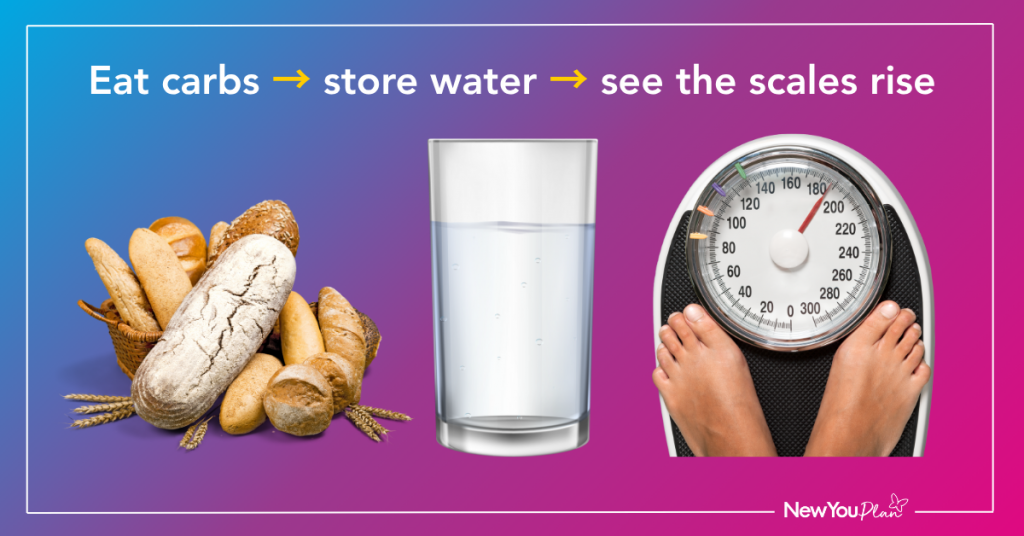
The word carbohydrate literally contains “hydrate” for a reason. For every 1 gram of carbohydrate, your body stores about 3 to 4 grams of water.
Eat carbs → store water → see the scales rise.
But this water is quickly released when you return to plan. So yes, that pasta dinner on Saturday could be causing your Monday morning panic, but it’s not fat gain. It’s temporary, reversible water weight.
3. Fat Loss is Always About a Calorie Deficit
There are countless diets, trends, injections and fads out there. But the truth never changes: Fat loss happens when you consume fewer calories than your body burns. Whether that deficit comes from:
• Eating fewer calories
• Moving more (walking, NEAT, workouts)
Or ideally, a combination of both… you must create a consistent calorie deficit to lose fat. This is where the New You Plan stands out. It gives you:
• The biggest safe calorie deficit
• 100% of your daily nutrition
• Fast, consistent fat loss that protects your healthThat’s why our plans outperform injections and fad diets. It’s not hype — it’s science
4. Daily Fluctuations Are Not the Truth: Weekly Averages Matter Most
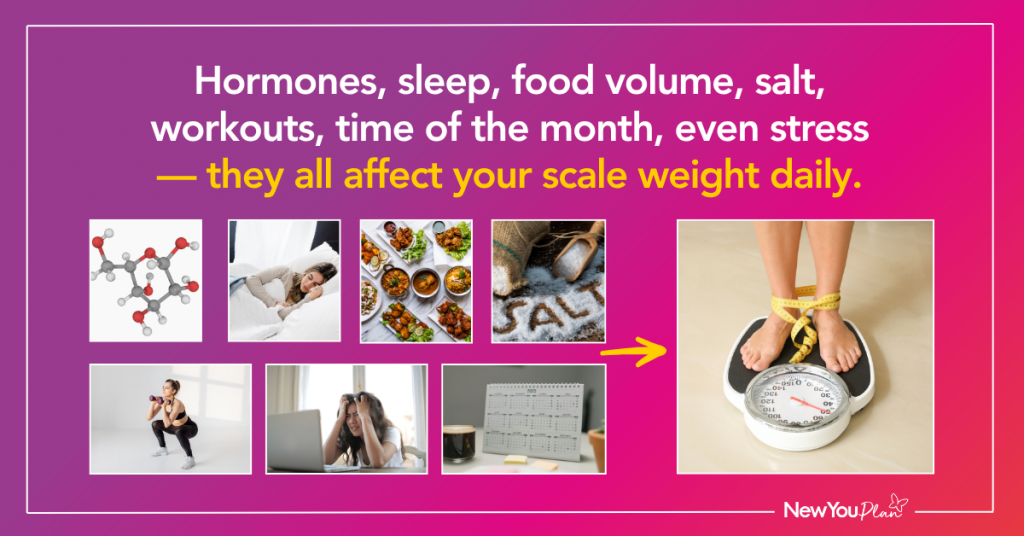
Hormones, sleep, food volume, salt, workouts, time of the month, even stress — they all affect your scale weight daily. The key is to:
• Weigh weekly or if you weigh daily use an app like happy scales that measures trends
• Watch for the trend, not the spike
• Don’t panic over a one-day jump. Even if you have a blip, your body responds quickly. Many customers regain control and drop the water weight in a matter of days.
5. Small Deficits, Big Results: The Power of 100 Calories
Removing just 100 calories per day adds up to:
• 700 per week
• 36,500 per year
• Over 10lbs of fat gone in a year, without major change.
This is why daily habits and consistency matter more than perfection.

6. NEAT: Your Secret Fat-Burning Superpower
NEAT = Non-Exercise Activity Thermogenesis. It’s the energy you burn just living your life (walking, cleaning, fidgeting). Boosting NEAT is powerful:
• Increasing steps from 3,000 to 10,000/day can burn 300-500+ calories/day
• That’s a pound of fat lost every 7-12 days.
Move more, without ever stepping into a gym
7. The Weight of Waste: Not Glamorous, But Real
Undigested food, fibre, and yes, poop, all weigh something.
You can carry 1–4 lbs of waste in your digestive system at any given time. So when the scales rise? Sometimes, you just need a good poo and a glass of water. Let’s normalise it.
Final Word: Trust the Maths. Stay on Plan. Don’t Panic
Your body is constantly adapting, responding, and rebalancing. Don’t let one weekend or one weigh-in undo your mindset.
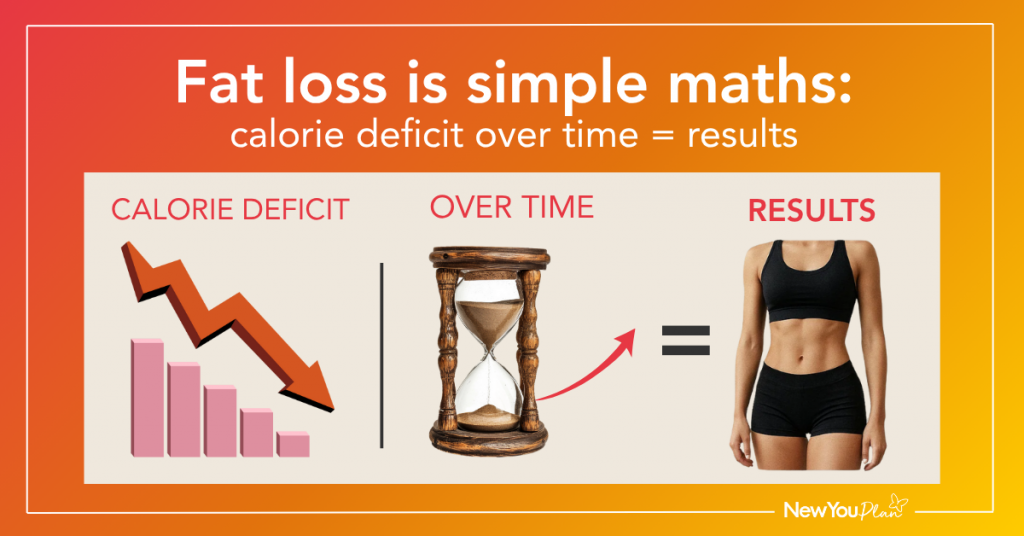
Fat loss is simple maths: calorie deficit over time = results.
And if you want the fastest, healthiest way to create that deficit?
Try The New You Plan Today
Medically safe, very low calorie diet
• 100% nutrition in every serving
• Simple plans with real results
• Fast fat loss, without guesswork
Explore our plans now and discover your New You.
Need a supportive community while you lose weight? Join our Secret Slimmers Facebook Group — over 30,000 customers just like you, sharing tips, love and encouragement every day.
Let’s do this — together.
The post The Mathematics of Weight Loss: Why the Scales Don’t Tell the Full Story first appeared on The New You Plan.
The post The Mathematics of Weight Loss: Why the Scales Don’t Tell the Full Story appeared first on The New You Plan.
Aideen
Comments
Post a Comment